Showing posts with label Astronomy Picture of the Day. Show all posts

Thursday, February 17, 2011

Astronomy Picture of the Day

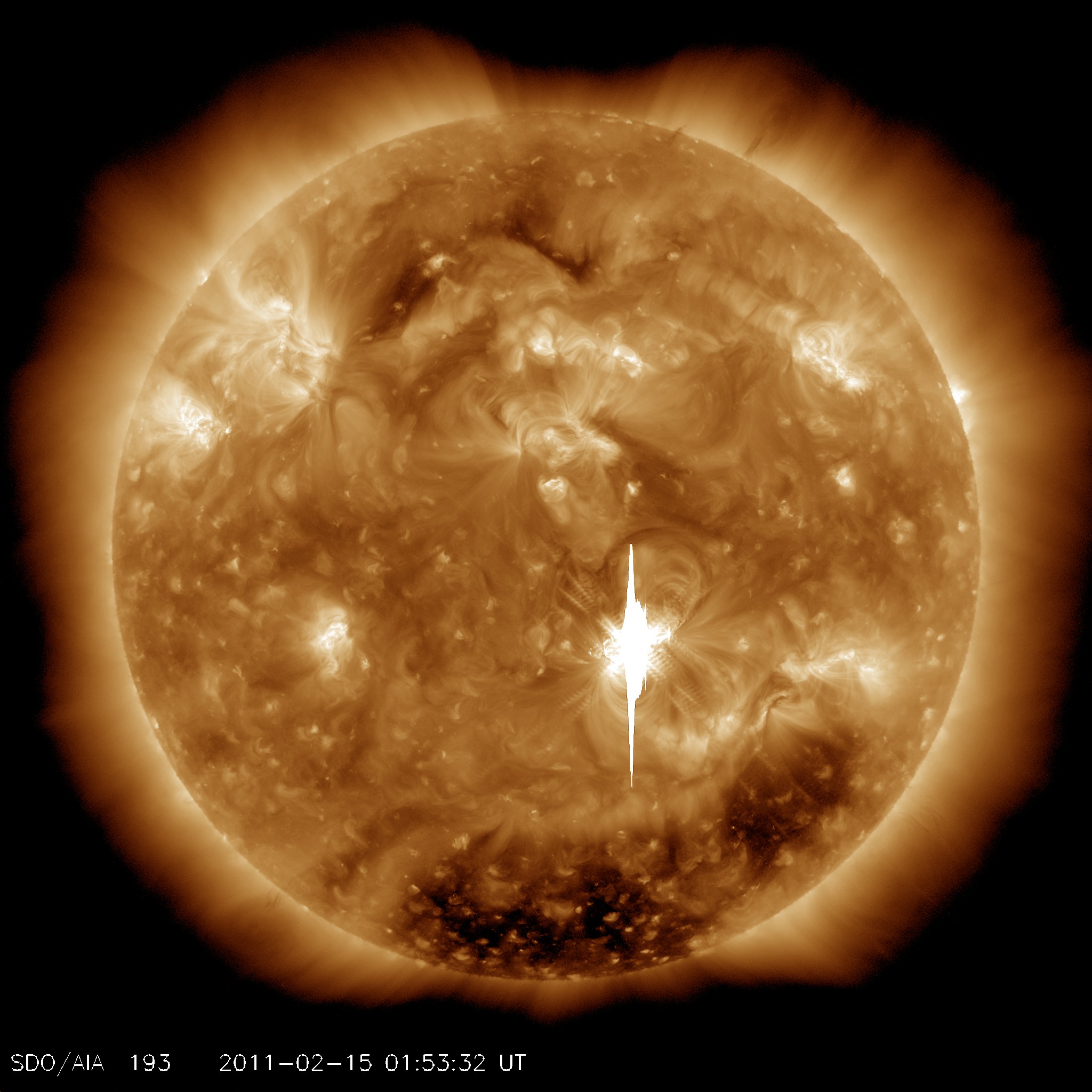
The X Class Flare observed by SDO is the Astronomy Picture of the Day. view the APOD here


Read more about the Valentine's Day Solar Flare:


Monday, May 24, 2010

SDO is the Astronomy Picture of the Day - May 22, 2010


Dark Filament of the Sun


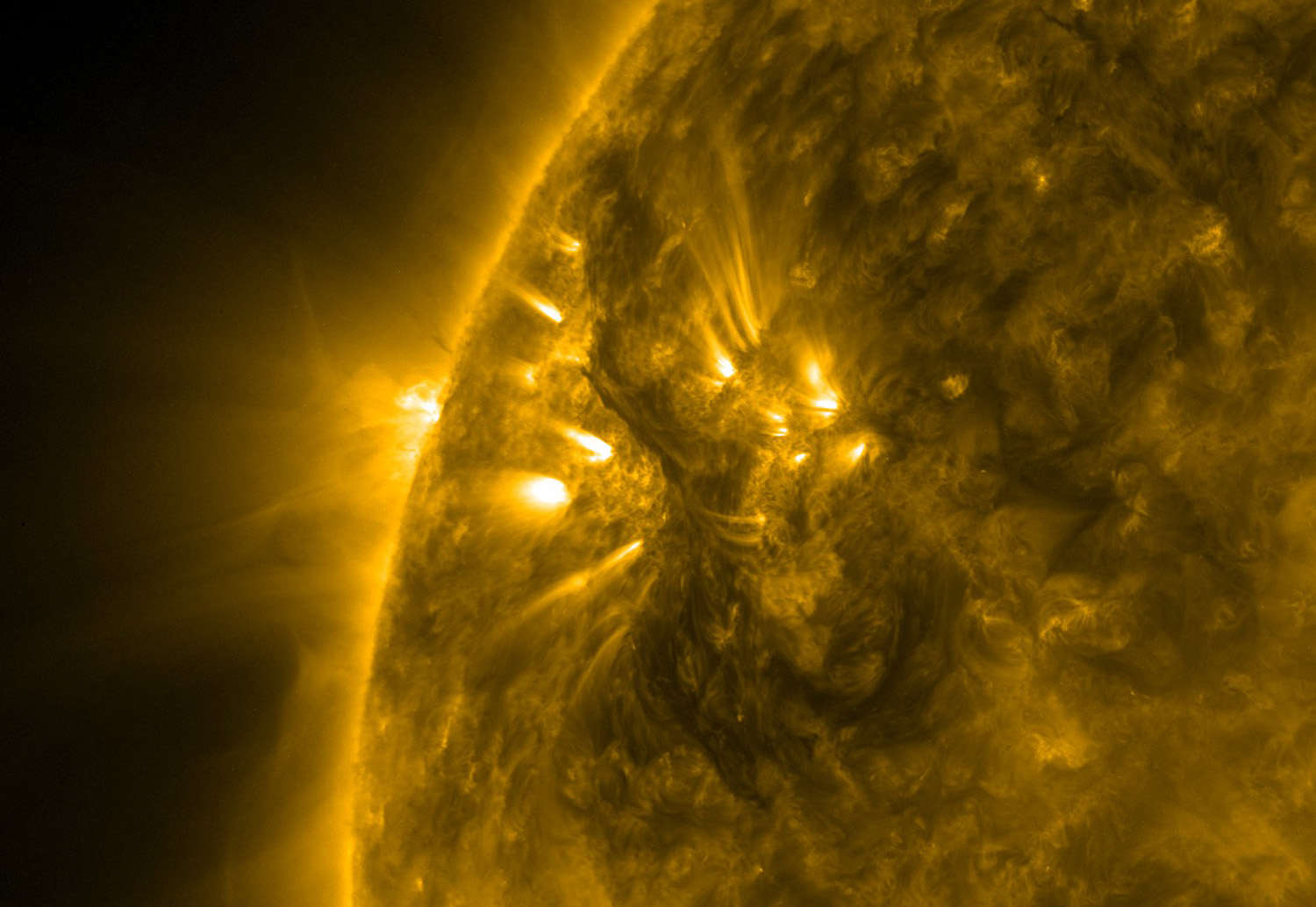
Explanation: Suspended by magnetic fields above a solar active region this dark filament stretches over 40 earth-diameters. The ominous structure appears to be frozen in time near the Sun's edge, but solar filaments are unstable and often erupt. The detailed scene was captured on May 18 in extreme ultraviolet light by cameras on board the Solar Dynamics Observatory. While the cooler plasma of the filament looks dark, hotter, brighter plasma below traces magnetic field lines emerging from the active region. When seen arcing above the edge of the Sun, filaments actually look bright against the dark background of space and are called prominences.


Credit: NASA / Goddard / SDO AIA Team
APOD Website

Monday, May 10, 2010

Astronomy Picture of the Day - 2010 May 10

http://antwrp.gsfc.nasa.gov/apod/ap100510.html

Large Eruptive Prominence Movie from SDO
Credit: NASA/Goddard/SDO AIA Team


Explanation: Sometimes part of the Sun can just explode into space. These explosions might occur as powerful solar flares, coronal mass ejections, or comparatively tame eruptive solar prominences. Pictured above is one of the largest solar prominence eruptions yet observed, one associated with a subsequent coronal mass ejection. The prominence erupted last month and was recorded by several Sun-sensing instruments, including the recently launched Solar Dynamics Observatory (SDO). The above time lapse sequence was captured by SDO and occurred over a few hours. In recent months, our Sun has becoming increasingly active, following a few years of an unusually dormant solar minimum. Over the next few years our Sun is expected to reach solar maximum and exhibit a dramatic increase in sunspots and all types of solar explosions.